New clients often need documents, access, forms, introductions and internal tasks. When the process is manual, small setup steps can be missed or handled differently each time.
AI improves consistency before it saves huge time. For onboarding, that consistency can be more valuable than the minutes saved.
Example workflow: starting a new client correctly
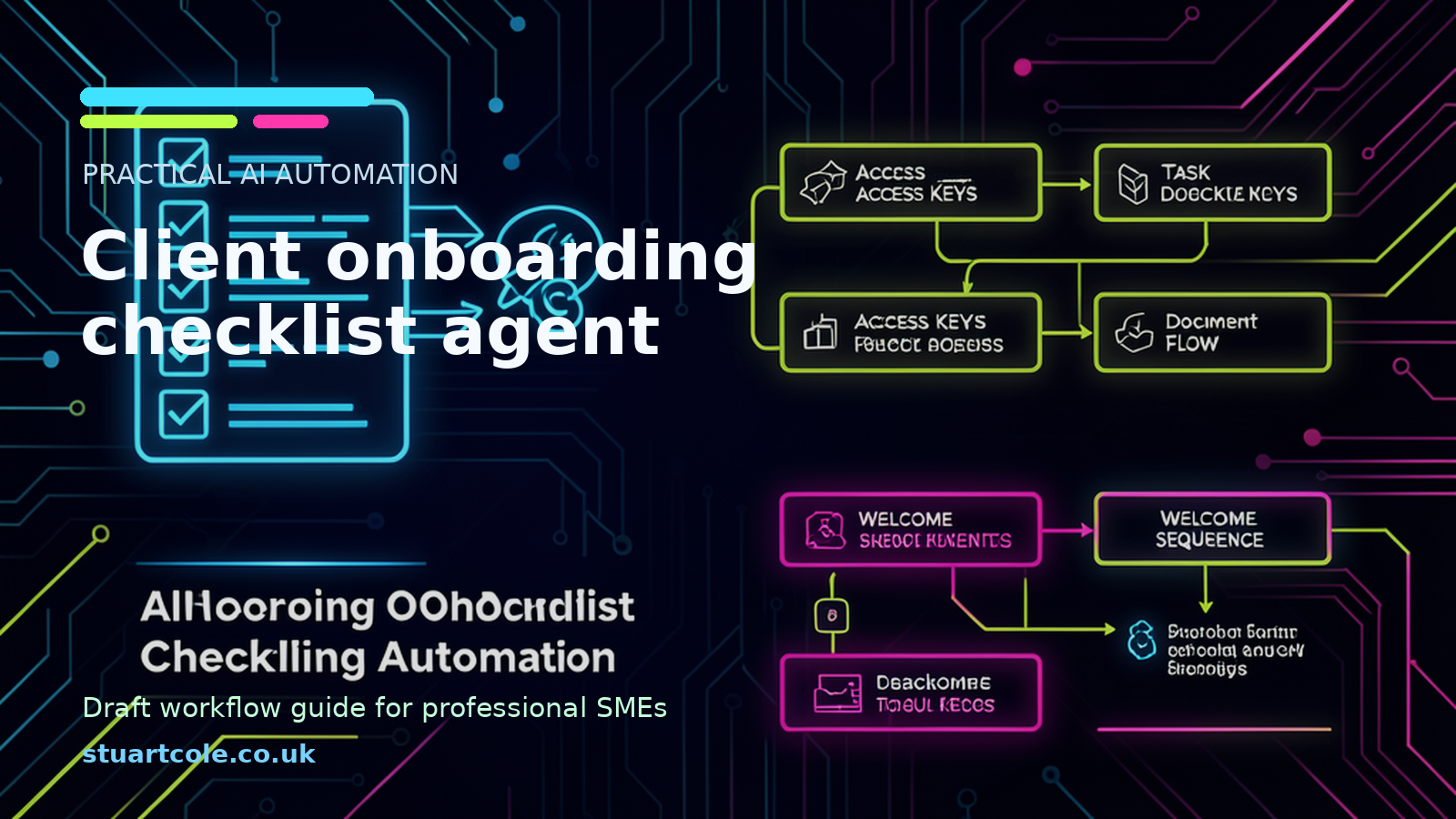
Once a proposal is signed or an onboarding form is completed, an AI agent reads the agreed service package and compares it with the internal onboarding checklist. It creates the internal task list, drafts a welcome email, identifies missing information and lists any system access that needs to be requested.
What the agent would use
- Signed proposal
- Onboarding form
- Service package
- Internal onboarding checklist
What it would produce
- Internal task list
- Welcome email
- Missing-information request
- System-access checklist
Where human approval fits
The account manager approves the welcome email and checks the task list before anything is sent to the client.
Likely saving and risk
Likely saving: 30 to 90 minutes per new client, plus fewer missed setup steps.
Risk level: low to medium, provided AI creates drafts and tasks rather than changing systems unattended.
Practical guardrails
- Use a standard onboarding checklist as the source of truth
- Separate internal tasks from client-facing messages
- Require approval before emails are sent
- Review the checklist whenever services change
A sensible next step
If onboarding depends too much on memory and manual copying, Stuart Cole Consulting can help you turn the process into a controlled AI-assisted workflow.