Before sales calls, staff often do rushed research or no research at all. That means they can miss useful context about the prospect’s business, recent changes or likely needs.
AI can make preparation more consistent without fake personalisation.
Example workflow: creating a one-page sales brief
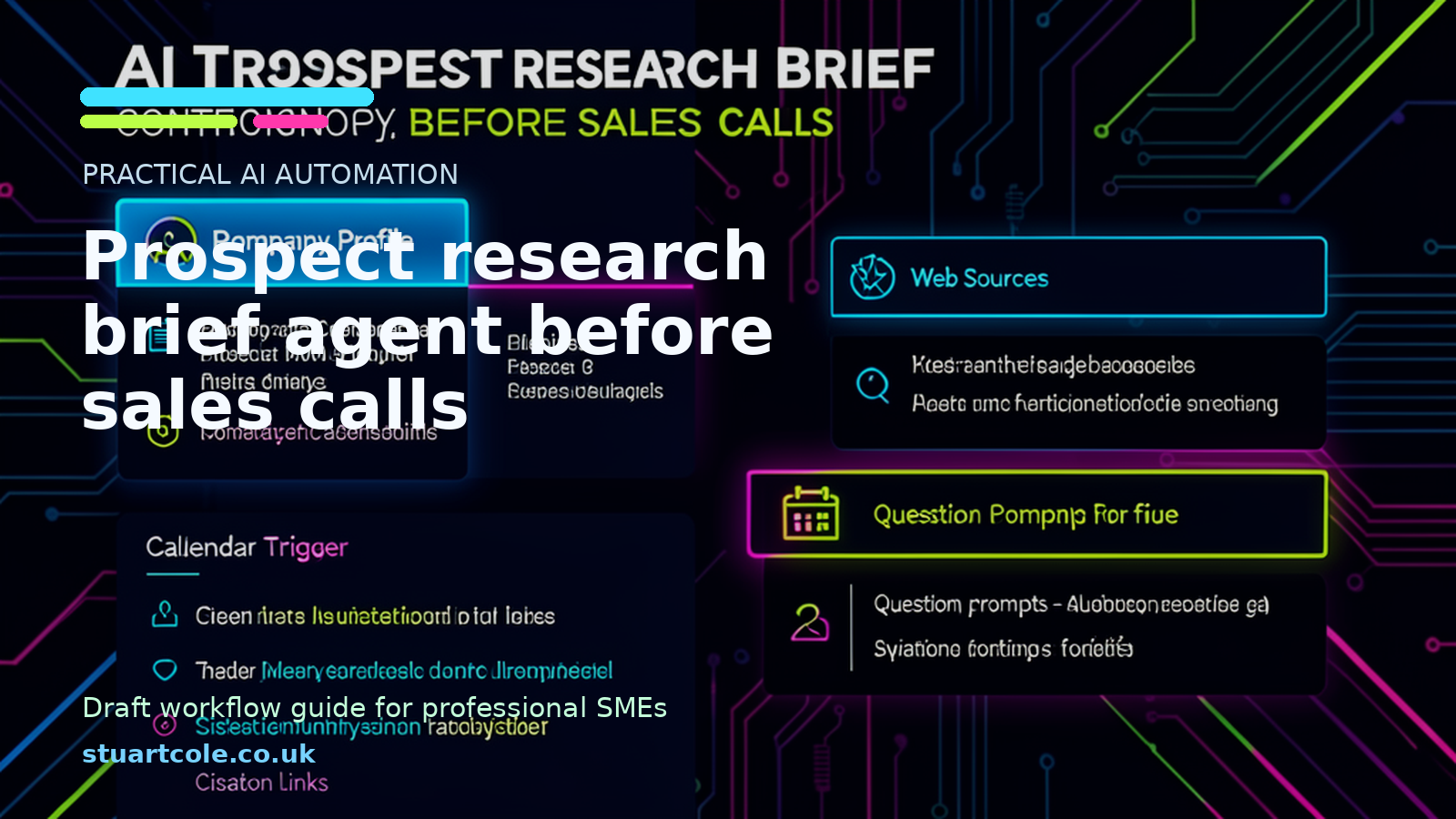
When a sales call is added to the calendar, an AI agent checks the prospect’s website, public company pages where available and internal CRM notes. It prepares a one-page brief with a company summary, likely needs, recent public updates, risks or unknowns and three useful questions to ask.
What the agent would use
- Prospect website
- Public company pages where available
- CRM notes
- Calendar invite
What it would produce
- One-page brief
- Three useful questions
- Risks and unknowns
- Suggested relevant case studies or services
Where human approval fits
The salesperson uses judgement. The brief is guidance, and any claim should be backed by a source and date.
Likely saving and risk
Likely saving: 15 to 30 minutes per sales call.
Risk level: medium. Public information can be stale or incomplete, and AI can overstate what it finds.
Practical guardrails
- Include sources and dates
- Separate facts from assumptions
- Avoid personalisation that feels creepy or forced
- Use CRM notes only where access is appropriate
A sensible next step
If sales preparation is inconsistent, Stuart Cole Consulting can help you design a briefing workflow that gives your team useful context without creating risky claims.