Professional SME websites often go stale because service pages, case studies and FAQs are pushed behind client work. The result is a site that no longer reflects what the business actually sells, what prospects ask or how the firm explains its value.
Good content automation starts from real business inputs and keeps publication under human approval.
Example workflow: refreshing service pages and FAQs
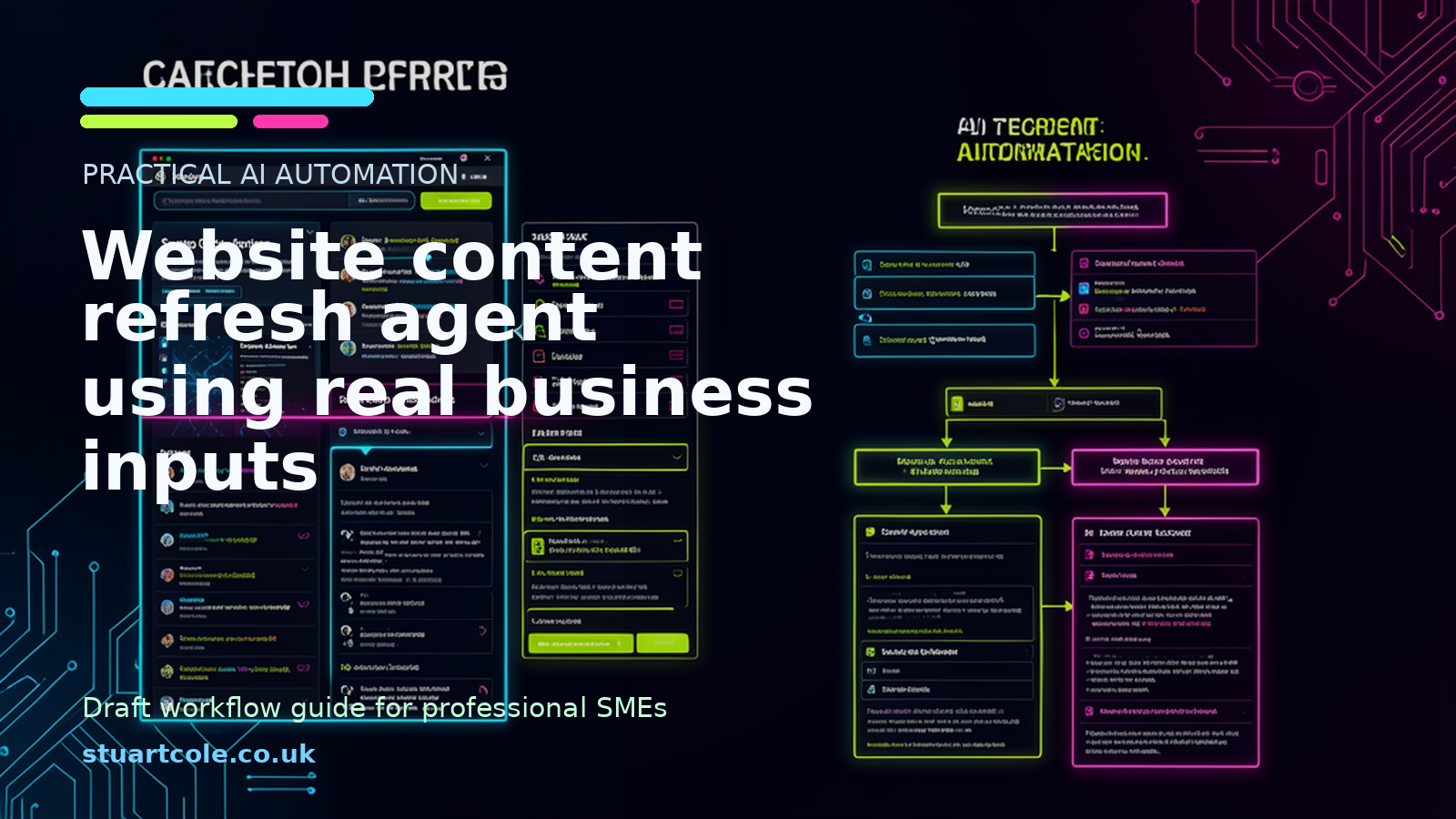
An AI agent reviews existing website pages, Search Console queries, anonymised client questions, proposal notes and current service descriptions. It suggests page updates, drafts new FAQ answers, identifies useful internal links and creates WordPress drafts for review. Nothing is published automatically.
What the agent would use
- Existing website pages
- Search Console queries
- Proposal or service notes
- FAQs from enquiries
What it would produce
- Suggested page updates
- Draft FAQ answers
- Internal-link suggestions
- Draft case-study or example pages
Where human approval fits
The business owner or marketer reviews every claim before publication. Public content should remain draft-only until approved.
Likely saving and risk
Likely saving: 2 to 6 hours per month.
Risk level: medium. Public claims, case studies and service descriptions need review to avoid exaggeration or accidental disclosure.
Practical guardrails
- Use real business inputs rather than generic prompts
- Anonymise client questions and examples
- Keep WordPress output as drafts
- Check claims before publishing
A sensible next step
If your website is accurate but stale, Stuart Cole Consulting can help you build a refresh workflow that creates useful drafts without handing your brand voice to a chatbot.