AI Automation Checklist for Gloucestershire SMEs is a practical question for Gloucestershire SMEs that want useful automation without turning the business upside down. The aim is not to chase every new AI tool, it is to find a sensible first workflow that saves time, reduces repetitive work, and keeps people in control.
The business problem
AI automation projects go wrong when the business jumps from idea to tool without defining the workflow. Gloucestershire SMEs do not need a huge strategy document, but they do need enough structure to avoid wasted time and unclear outcomes.
What AI can realistically do
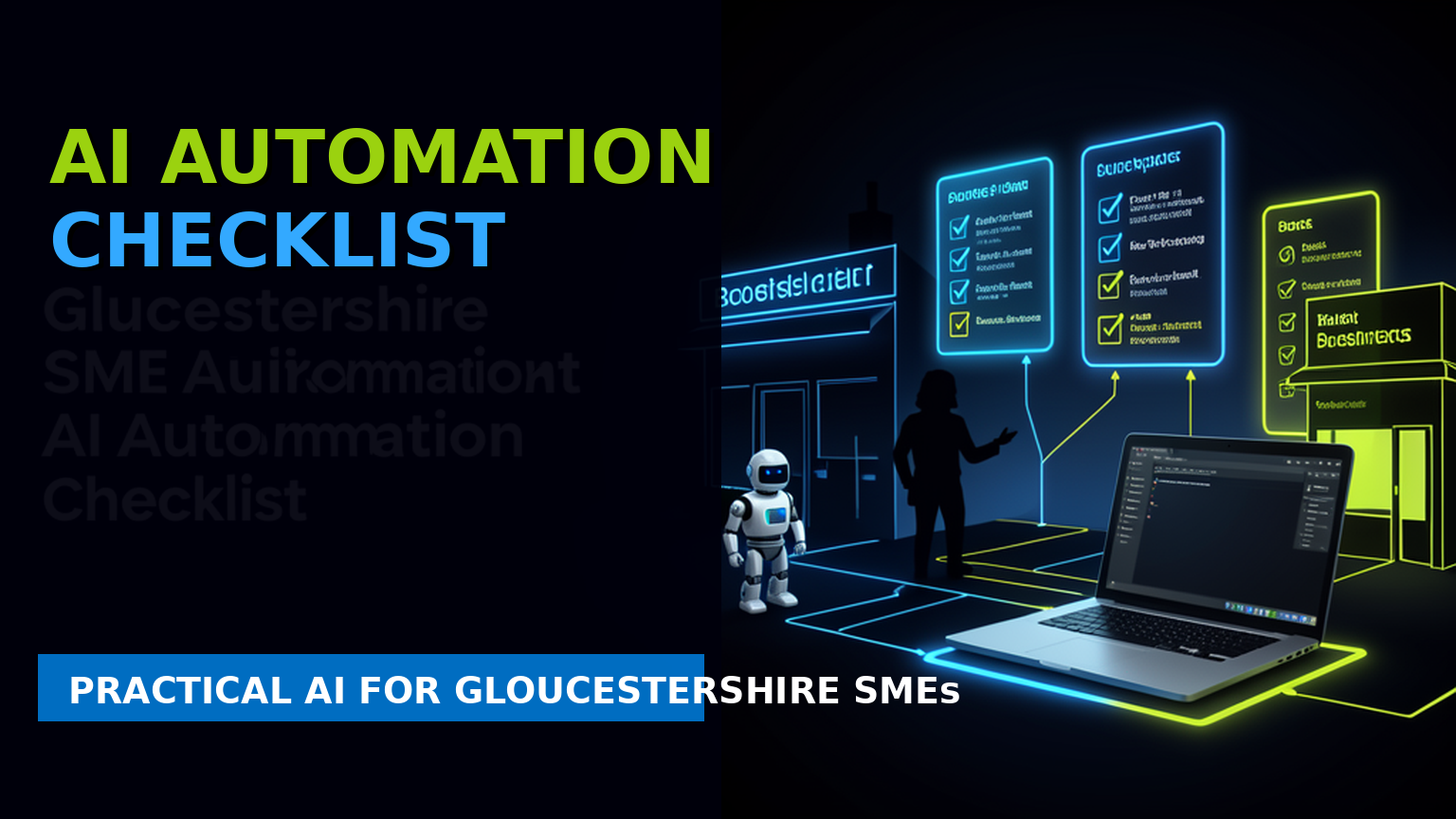
A good checklist covers the business problem, current process, data sources, risks, people involved, success measure, and first test. AI can then be applied where it genuinely reduces friction: summarising, drafting, routing, checking, or preparing work for review.
What this could look like in practice
For a local business that wants to reduce admin after customer calls, the checklist might identify call notes, CRM fields, follow-up emails, responsibility for review, and the point where a human approves the next action. That turns “use AI” into a specific workflow design.
What to avoid
Avoid automating undocumented work. Avoid collecting more data than the workflow needs. Avoid launching without a rollback plan. Avoid treating the first version as permanent, early automation should teach you how the process really behaves.
First step
Create a one-page automation brief: problem, current steps, inputs, output, owner, risks, and desired result. If that brief is difficult to write, the first job is process clarity rather than technology.
Want to know whether this would work in your business?
Send me a short description of the process, task or problem you want to improve. I’ll give you a practical view on whether AI is a sensible fit and what the first step would look like.