Private AI for Business: What SMEs Need to Know About Data and Control is a practical question for Gloucestershire SMEs that want useful automation without turning the business upside down. The aim is not to chase every new AI tool, it is to find a sensible first workflow that saves time, reduces repetitive work, and keeps people in control.
The business problem
SMEs want the productivity benefits of AI, but many are rightly cautious about customer data, contracts, pricing, staff information, and internal documents. If the rules are unclear, staff may avoid AI completely or use it in risky ways.
What AI can realistically do
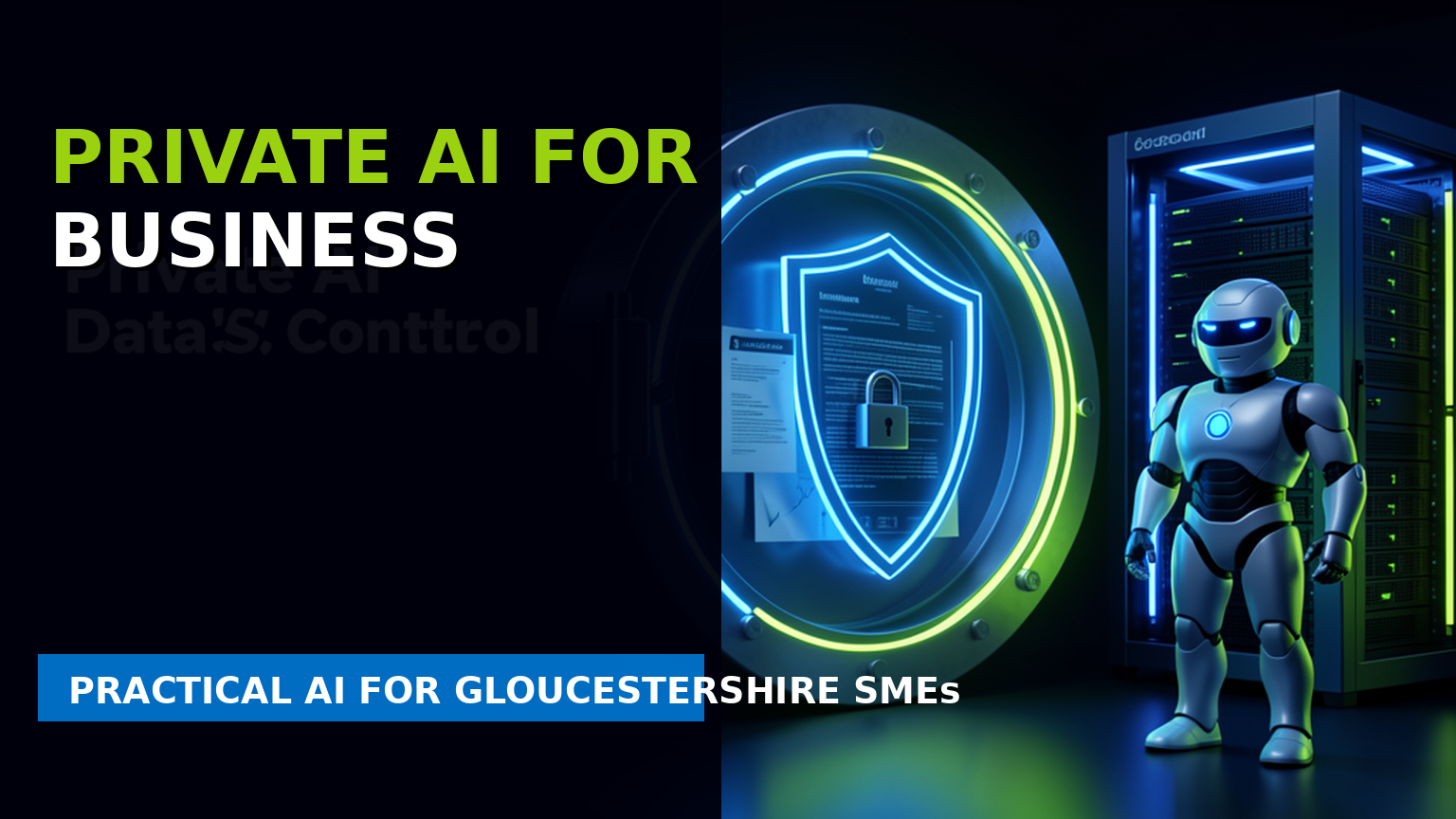
Private AI is about designing boundaries. That might mean a local model, a private workspace, carefully permissioned document search, approved data sources, audit trails, or human approval before any action. The goal is useful assistance without losing control of sensitive information.
What this could look like in practice
An SME could build a private assistant that answers staff questions using only approved internal documents. It might help with service procedures, product details, onboarding notes, and standard responses. The assistant can show where its answer came from, making it easier to verify.
What to avoid
Avoid assuming a privacy label solves everything. You still need access control, sensible data selection, staff guidance, and a plan for mistakes. Also avoid uploading the entire business archive on day one. Start with a small, high-value document set.
First step
Choose one information set that staff search repeatedly and that would be useful if made easier to query. Review whether it contains sensitive data, who should access it, and what answers would need human checking.
Want to know whether this would work in your business?
Send me a short description of the process, task or problem you want to improve. I’ll give you a practical view on whether AI is a sensible fit and what the first step would look like.