Proposals are slow because they reuse the same broad structure, but every prospect still needs specific context, scope, assumptions, pricing notes, exclusions and next steps.
AI can help with speed, but it must not be allowed to make commercial promises on its own.
Example workflow: drafting a tailored proposal
After a discovery call, an AI agent reads the meeting notes, discovery answers, service catalogue and approved proposal examples. It drafts a proposal with the prospect’s context, proposed scope, deliverables, assumptions, exclusions and next steps. It also lists missing information and highlights anything that needs a senior review.
What the agent would use
- Discovery-call notes
- Service catalogue
- Pricing rules
- Previous approved proposal examples
What it would produce
- Draft proposal
- Assumptions list
- Missing-information checklist
- Draft covering email
Where human approval fits
A senior person reviews scope, risk, pricing and wording before the proposal is sent.
Likely saving and risk
Likely saving: 1 to 3 hours per proposal.
Risk level: high if AI is allowed to invent prices, deadlines, legal terms or commitments. Pricing and terms must be rule-based and reviewed.
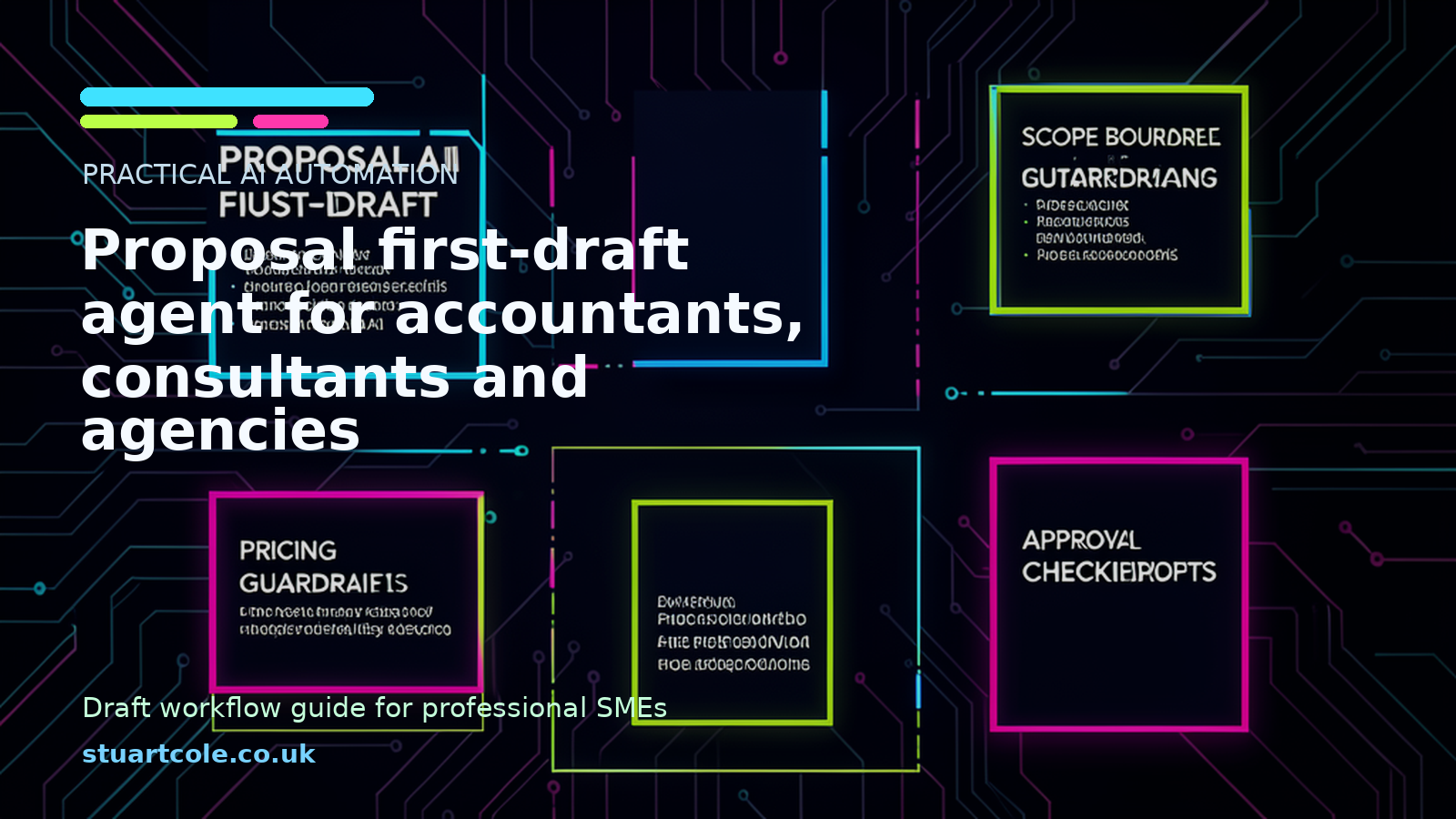
Practical guardrails
- Use approved service language
- Lock pricing to clear rules or approved ranges
- Include exclusions and assumptions
- Require senior approval before sending
A sensible next step
If proposals take too long but you do not want generic AI wording, Stuart Cole Consulting can help you build a controlled first-draft process around your real services and templates.